
Cubital Tunnel Syndrome
Overview
Cubital Tunnel Syndrome (CTS) is a condition that affects the ulnar nerve, the nerve that runs on the inside of the elbow. This nerve provides sensation to your ring and little fingers and controls some of the muscles in your hand. When this nerve is compressed or stretched, it can cause numbness and tingling in the fingers, hand weakness, and sometimes pain – all common symptoms of CTS.
The condition is relatively common, particularly in those who perform repetitive elbow movements, or consistently lean on their elbow. Like its more popular cousin, carpal tunnel syndrome, which affects the wrist, cubital tunnel syndrome can greatly impact your daily activities and overall quality of life.
Types
There are no identified types or subtypes of cubital tunnel syndrome. However, the severity of the condition can vary from patient to patient, with some experiencing mild short-lived symptoms and others experiencing severe or persistent symptoms.
Causes
Cubital Tunnel Syndrome is primarily caused by pressure or stretching of the ulnar nerve. Several factors can contribute to this, including:
-
- Repeated bending of the elbow, such as when using a computer or doing manual work
-
- Leaning on your elbow for long periods of time
-
- Bone spurs or arthritis in the elbow
-
- Fluid build-up in the elbow which can put pressure on the ulnar nerve
Symptoms
Common symptoms of Cubital Tunnel Syndrome include:
-
- Numbness and tingling in the ring and little fingers
-
- Weakness in the hand
-
- Difficulty with finger coordination (for example, typing or playing a musical instrument)
-
- A decreased ability to grip objects
Less common symptoms can include:
-
- Pain in the forearm
-
- A feeling of the pinky and ring fingers “falling asleep”
-
- Curling up of the ring and little fingers
Diagnosis
Your healthcare provider will usually diagnose cubital tunnel syndrome through a physical examination and by asking about your symptoms and medical history. They may also suggest conducting:
-
- Nerve conduction studies to measure how well and how fast the nerves can send electrical signals
-
- Electromyography (EMG) to diagnose muscle disorders and nerve damage
Treatment Options
The treatment options for Cubital Tunnel Syndrome fall generally into two categories:
- Conservative (non-surgical) treatments
- Surgical treatments
Conservative treatments are usually the first course of action and can include:
-
-
- Wearing a splint or supportive brace
-
-
-
- Taking anti-inflammatory drugs
-
-
-
- Performing nerve gliding exercises
-
-
-
- Modifying your activities to avoid the actions that cause symptoms
-
If your symptoms do not improve with conservative treatments, your doctor may discuss surgical options with you. These can include:
-
-
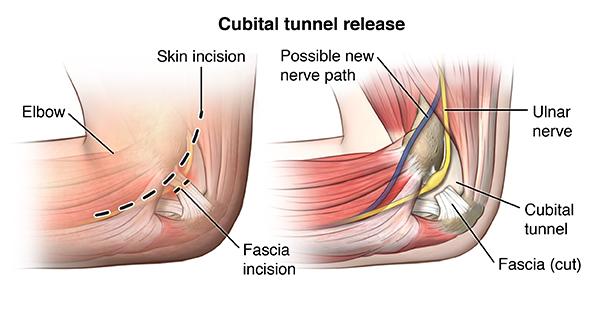
- Cubital tunnel release to directly decompress the nerve
-
-
-
- Ulnar nerve anterior transposition, where the nerve is moved from behind the elbow to the front
-
-
-
- Medial epicondylectomy, a procedure that involves removing a part of the bone in the elbow to relieve pressure on the nerve
-
Living With Cubital Tunnel Syndrome
Living with Cubital Tunnel Syndrome requires some lifestyle adjustments. Here are some practical tips:
-
-
- Avoid activities that require you to keep your elbow bent for long periods
-
-
-
- Protect your elbow from cold temperatures
-
-
-
- Ensure your elbow is not bent when you sleep – using a brace can help with this
-
-
-
- Regularly perform nerve gliding exercises advised by your doctor
-
When to Seek Help
Impaired hand function, continuous numbness, or intense pain are signs that you should seek immediate medical attention. If you’re not finding relief from conservative treatments, or your symptoms are worsening, consult your healthcare provider to discuss further methodologies.
Understand that every patient’s journey with CTS is different – it’s important to find what methods work best for you. Always consult your healthcare provider for personalized advice and treatment options.


