
Morton’s Neuroma
Overview
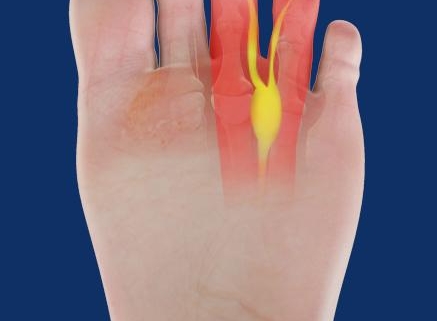
Morton’s neuroma is a noncancerous condition characterized by the thickening of the tissue around one of the nerves leading to the toes. This thickening results in foot pain, often described as if standing on a pebble inside your shoe. Morton’s Neuroma can usually affect the third and fourth toes, but can occur between any toe. It’s more frequent in women than men, particularly those who frequently wear high-heeled or narrow shoes.
Types
Morton’s Neuroma is a specific condition and does not have any identified subtypes. However, symptoms and severity may vary largely from patient to patient.
Causes
The exact causes of Morton’s Neuroma are not clearly defined, but several factors are believed to contribute to its development. These include:
– Footwear: High-heeled or tight shoes can squeeze the toes together, causing nerve strain.
– Foot deformities: Conditions like bunions, hammer toes, flat feet, and high arches can make you more susceptible.
– Trips and Falls: Injuries or trauma to the foot can lead to the condition.
– High-Impact Activities: Sports or occupations that involve high impact on the foot can lead to Morton’s Neuroma.
Symptoms
Symptoms of Morton’s Neuroma generally occur only during certain activities or when wearing certain shoes. Symptoms may include:
– Tingling or numbness in the toes.
– The sensation of standing on a lump or pebble inside the shoe.
– Pain in the ball of the foot that may radiate to the toes.
– Sharp or dull pain in forefoot, worsening over time.
Diagnosis
To diagnose Morton’s Neuroma, your doctor will first conduct a physical examination and ask about your symptoms. The doctor might press on your foot to feel for a mass or tender spot. Further to this, you might need to undergo further tests including:
– X-ray: To rule out other conditions.
– Ultrasound: This test uses sound waves to visualize soft tissues and can be particularly helpful in revealing Morton’s Neuroma.
– MRI: In some cases, a magnetic resonance imaging (MRI) scan might be recommended to get a detailed view of the foot.
Treatment Options
The treatment of Morton’s Neuroma largely depends on how long you’ve had the condition and its severity. Treatments range from conservative to surgical approaches. Here are your options:
– Shoe modifications: Wide shoes with low heels and a soft sole are often recommended.
– Orthotic devices: Custom-made shoe-inserts may help correct foot deformities causing the neuroma.
– Medication: Nonsteroidal anti-inflammatory drugs can reduce pain and swelling, while injecting steroids into the painful area may help relieve pain.
– Decompression surgery: In some cases, removing the pressure on the nerve by cutting nearby structures, such as the ligament binding together some of the bones in the front of the foot, may be recommended.
– Nerve removal: Surgical removal of the nerve may be considered if other treatments have failed, though this procedure carries the risk of numbness in the affected toes.
Living With Morton’s Neuroma
Living with Morton’s Neuroma involves making key lifestyle alterations and following certain strategies:
– Choose the right footwear: Shoes with a high, wide toe box (toe area) are recommended.
– Avoid activities that put pressure on your toes.
– Take OTC pain relievers as required.
– Regularly ice the affected area.
– Maintain a healthy weight to lower the pressure on your feet.
When To Seek Help
Don’t ignore symptoms of Morton’s Neuroma. Seek immediate medical assistance if you experience persistent pain, numbness, or tingling in your foot or toes, especially if these symptoms don’t improve with rest or change in footwear. Ignoring these symptoms can cause the condition to worsen over time and potentially lead to long-term nerve damage.


