
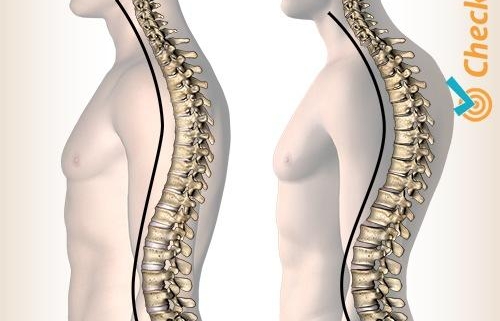
Scheuermann’s Disease
Overview of Scheuermann’s Disease
Scheuermann’s Disease, also known as Scheuermann’s Kyphosis, is a developmental disorder of the spine usually diagnosed in adolescents between the ages of 13 and 16. It is characterized by vertebrae that have an abnormal wedge shape, causing the spine to curve excessively. This abnormality can result in a hunched back in more severe cases. While it’s relatively uncommon, affecting only around 0.4 to 8 percent of the population, Scheuermann’s Disease can significantly impact a person’s posture and life quality.
Types of Scheuermann’s Disease
There are two primary forms of Scheuermann’s Disease:
1. Classical or Typical Type: This type is a condition seen in the thoracic spine or upper back and is more common. It results in kyphosis or a “round back” appearance.
2. Atypical or Lumbar Type: This involves the lumbar spine or lower back. It is less common but can cause more discomfort and pain due to the additional stress the lower back endures.
Causes of Scheuermann’s Disease
The exact causes of Scheuermann’s Disease are not identified, but it is thought to be hereditary, as it often appears in more than one family member. Some researchers suggest it may be due to avascular necrosis, where a lack of blood flow causes bone death. Others believe it could be due to mechanical reasons as children grow, especially if they participate in sports that place a lot of stress on the spine.
Symptoms of Scheuermann’s Disease
While some people with Scheuermann’s Disease may have mild symptoms or none, others can experience:
– Excessive curvature of the spine
– Back pain, typically worsening with physical activity
– Stiffness in the back
– Fatigue
– Difficulty maintaining an upright posture
In more severe cases, individuals may also have difficulty breathing due to the abnormally curved spine restricting lung capacity.
Diagnosis of Scheuermann’s Disease
Diagnosis generally begins with a physical examination where the doctor checks the spine’s flexibility and looks for signs of curvature. An X-ray will typically be taken so the doctor can examine the shape of the vertebrae and make measurements to determine the curvature degree. A diagnosis of Scheuermann’s Disease is usually made if three or more adjacent vertebrae are wedged together at an angle of at least 5 degrees each.
Treatment Options for Scheuermann’s Disease
The treatment of Scheuermann’s Disease depends on the severity of symptoms and the curvature degree. Options include:
– Non-surgical treatments: These are used for less severe cases and may include physical therapy exercises to improve posture, strengthen back muscles, and increase flexibility. Anti-inflammatory medications can also help to manage pain.
– Bracing: In some cases, a brace may be used to prevent the curve from worsening as the child grows.
– Surgery: For severe cases, spinal fusion surgery might be necessary. This involves placing bone grafts between the abnormal vertebrae, which, when healed, will prevent further curvature.
Living With Scheuermann’s Disease
Living with Scheuermann’s Disease can be challenging, but there are strategies to make it easier:
– Follow your prescribed exercise plan to increase flexibility and strength.
– Take breaks from activities that strain the back.
– Aim to maintain a healthy weight, as extra weight can put more stress on the spine.
– Make sure to take medications as prescribed.
– Regularly attend check-ups to monitor the disease progression.
When to Seek Help
It’s crucial to seek medical help if you or your child experience repeated episodes of severe back pain, noticeable changes in posture (such as stooping or hunching), or difficulties in breathing. Also, see a doctor if treatments aren’t relieving your symptoms. Early diagnosis and treatment can often prevent the condition from worsening.


