
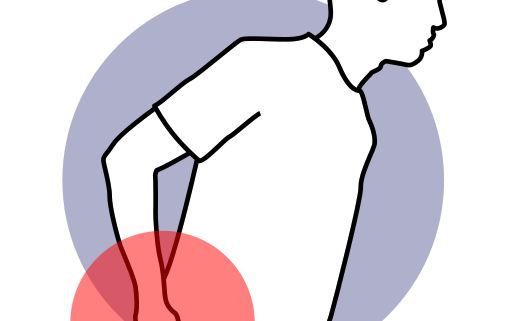
Hip pain in adults
Hip pain is common, especially as you get older. There are things you can do to ease the pain, but get medical help if your hip is very painful or the pain does not get better.
Causes of hip pain
There are lots of possible causes of hip pain. It might be caused by a sudden injury or a longer-lasting problem such as arthritis.
Your symptoms might give you an idea what could be causing the pain. But do not self-diagnose, see a GP if you’re worried.
| Symptoms | Possible cause |
|---|---|
| Pain, swelling or bruising after intense or repetitive exercise | Sprain or strain |
| Over 45 years of age, pain worse when walking and stiffness after moving | Osteoarthritis |
| Pain and stiffness worse after not moving (for example, when you wake up) | Rheumatoid arthritis |
| Hot, swollen hip and a high temperature or feeling hot and shivery | Joint infection (septic arthritis) |
| Severe pain and unable to walk after a fall or injury | Hip fracture |
How you can ease hip pain
There are things you can do to help ease hip pain.
Do
- try to avoid putting too much strain on your hip – it’s best to keep moving if you can, but try not to overdo things
- put an ice pack (or bag of frozen peas) in a towel on the painful area for up to 20 minutes every 2 to 3 hours
- use painkillers such as paracetamol or ibuprofen gel (or ibuprofen tablets if needed)
- wear comfortable, shock-absorbing shoes with a soft sole
- try to lose weight if you’re overweight
- try gentle hip stretching exercises
Don’t
- do not carry anything heavy
- do not sit in low chairs – this can put extra pressure on your hips
Non-urgent advice:See a GP if:
- hip pain is stopping you doing normal activities or affecting your sleep
- the pain is getting worse or keeps coming back
- the pain has not improved after treating it at home for 2 weeks
- you have hip stiffness for more than 30 minutes after waking up
Urgent advice:Ask for an urgent GP appointment or get help from Health811 if:
- you have severe hip pain that started suddenly but you’ve not had a fall or injured your hip
- your hip is swollen and feels hot
- the skin around your hip has changed colour
- you have hip pain and feel generally unwell and have a high temperature or feel hot and shivery
You can call 811 or get help from 811 online.
What we mean by severe pain
Severe pain:
- always there and so bad it’s hard to think or talk
- you cannot sleep
- it’s very hard to move, get out of bed, go to the bathroom, wash or dress
Moderate pain:
- always there
- makes it hard to concentrate or sleep
- you can manage to get up, wash or dress
Mild pain:
- comes and goes
- is annoying but does not stop you doing daily activities
Immediate action required:Call 911 or go to A&E if:
- you have severe hip pain after a fall or injury
- you’re unable to walk or put weight on your leg
- you have any tingling or loss of feeling in your hip or leg after an injury
Treatments for hip pain
Treatment for hip pain depends on what’s causing it.
A GP might:
- prescribe stronger painkillers
- give you some simple exercises to try
- refer you for physiotherapy for more help with exercises and stretches to ease the pain
- refer you for occupational therapy – an occupational therapist can help with things to make your life easier, such as walking sticks or walking aids
- refer you to a specialist – the specialist may do a scan and discuss treatments such as steroid injections or surgery
Some people with pain caused by a damaged hip joint may eventually need a hip replacement if other treatments do not help.
Page last reviewed: 11 March 2022
Next review due: 11 March 2025


